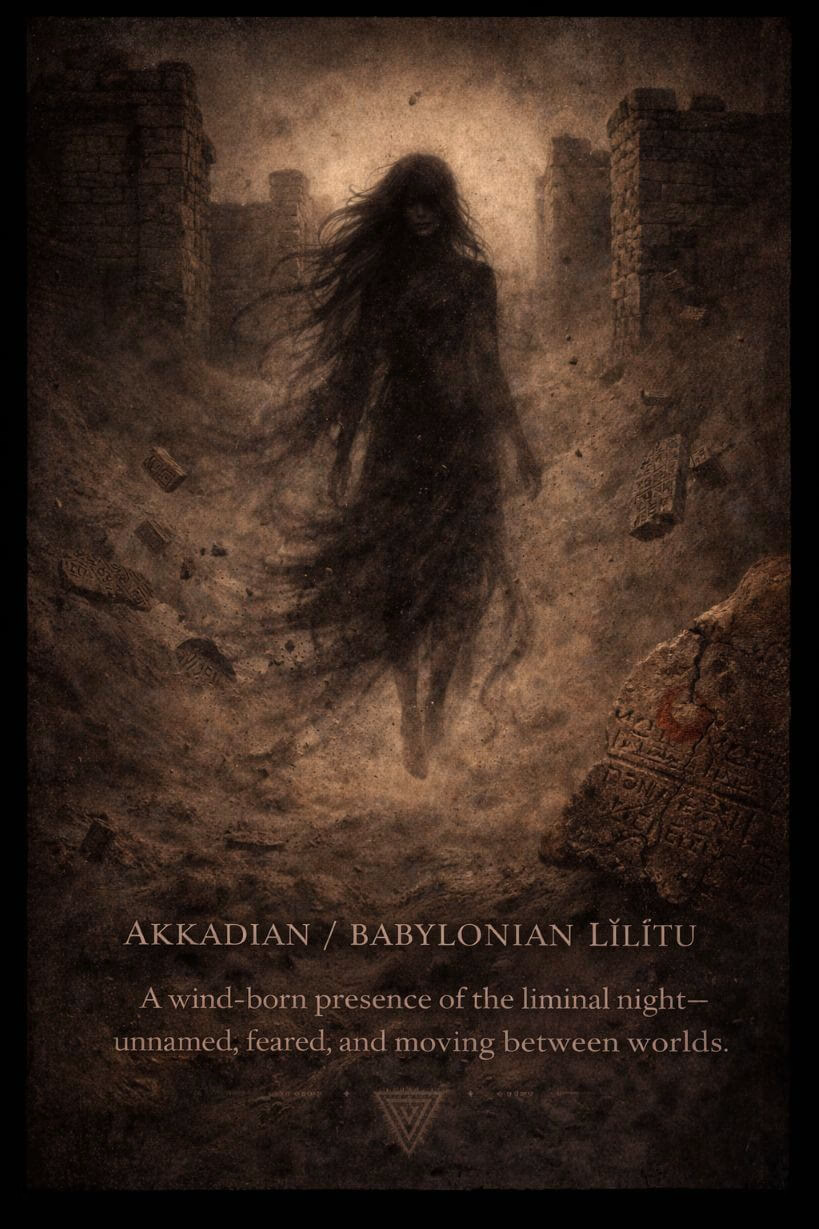
Akkadian - Babylonian Līlītu: Wind Spirits Before Lilith
In the ancient cultures of Assyria and Babylonia, the terms lili (spirit) and its feminine form līlītu appear in Akkadian cuneiform sources as designations for spirits or supernatural forces. These terms predate the later Hebrew figure known as Lilith and reflect a Mesopotamian worldview centered on wind, air, and liminality rather than on individualized mythic characters.
Within Akkadian literature, līlītu does not refer to a singular being with narrative identity, will, or psychology. Instead, it names a category of spirits associated with wind, night air, and open or desolate spaces—regions lying beyond cultivated land and social order. These spirits belong to a broader system of unseen forces believed to influence health, fertility, and environmental conditions.
Linguistically, the root lil (or lil₂) is associated with air, breath, or spirit. In lexical lists and ritual texts, līlītu appears alongside other supernatural entities, indicating a classificatory logic rather than a mythic genealogy. Artistic fragments and later iconography sometimes depict such spirits with wings or talons, emphasizing movement, instability, and their connection to untamed natural forces—not personality or moral narrative.
Although līlītu is attested centuries before any named Lilith figure, scholars recognize that these Mesopotamian terms influenced later Semitic languages and traditions. The Hebrew lîlîṯ in Book of Isaiah (34:14) is linguistically related to earlier Akkadian forms. However, the emergence of Lilith as a distinct demoness or mythic persona occurs much later, through Jewish, medieval, and folkloric reinterpretation rather than direct continuity.
In Akkadian and Babylonian sources, līlītu remains impersonal and functional: a wind-like force, unpredictable and liminal, tied to the edges of the known world. Mesopotamian ritual texts sometimes address such spirits not in moral terms of good or evil, but as powers to be recognized, managed, or appeased—part of a cosmology in which unseen forces permeate daily life.
Understanding līlītu on its own historical and linguistic terms helps separate early Mesopotamian religious concepts from later mythic storytelling. What later becomes “Lilith” begins not as a character, but as a name for wind, night, and the destabilizing presence of the unseen.
References
- Akkadian terms lili and līlītu are attested as general spirit terms in Mesopotamian cuneiform and do not originally signify a single demon figure. Wikipedia
- The root lil likely connects to concepts of air or spirit, with Mesopotamian līlītu depicted as wind spirits and linked to desolate places or storm imagery, not personal mythic narratives. newworldencyclopedia