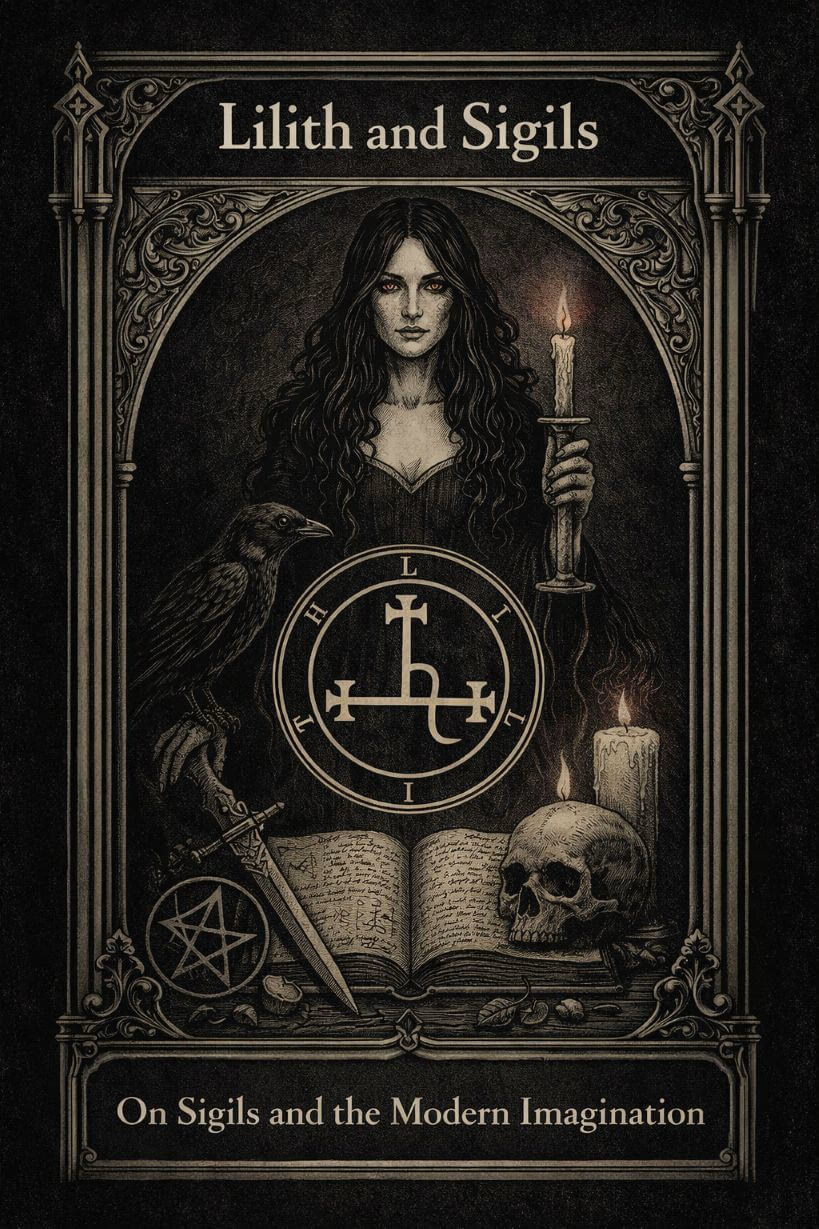
Lilith and Sigils
On Sigils and the Modern Imagination
Lilith has no original sigil.
This is not a loss, and it is not a mistake in history. It is a misunderstanding about what sigils are and what Lilith represents.
In the ancient sources where Lilith first appears — Mesopotamian texts, later Jewish writings, and medieval folklore — there are names, descriptions, and warnings, but no visual symbols assigned to her. She exists in language and narrative, not in glyph.
Sigils belong to a different tradition.
The practice of creating sigils emerges much later, primarily in medieval and early modern ceremonial magic. In these traditions, sigils are not historical records or inherited emblems. They are constructed symbols — designed to condense intention, focus attention, and give form to something that resists direct expression.
A sigil is not discovered.
It is made.
When modern images or seals are presented as “the original symbol of Lilith,” what we are seeing is not ancient continuity but modern projection. These symbols borrow the visual language of grimoires — circles, crosses, fragmented letters — to create an impression of age and authority. Their power lies in aesthetics and imagination, not in historical lineage.
This does not make them false.
It places them where they belong.
In psychological terms, sigils function as instruments of the psyche. They allow instinct, fear, desire, and taboo to be given form without explanation. They operate where language becomes insufficient. From a Jungian perspective, this is the work of the imaginal — the psyche shaping symbols in order to encounter what has been rejected or pushed into shadow.
Lilith attracts sigils precisely because she represents what refuses containment. Autonomy, exile, forbidden instinct, and the collapse of obedience do not lend themselves easily to stable images. Each generation redraws her differently, not because the past was incomplete, but because the psyche keeps changing its questions.
Modern sigils associated with Lilith are therefore mirrors, not relics.
They reflect the needs, fears, and longings of the time that produced them. They show us how Lilith is being imagined now — not how she “originally” was.
In this work, sigils are treated as symbolic expressions, not sources of authority. They belong to the modern imagination, to personal meaning-making, and to aesthetic or ritual practice — not to history.
Lilith remains what she has always been here:
a psychic marker of rejected instinct, encountered through perspective rather than possession.