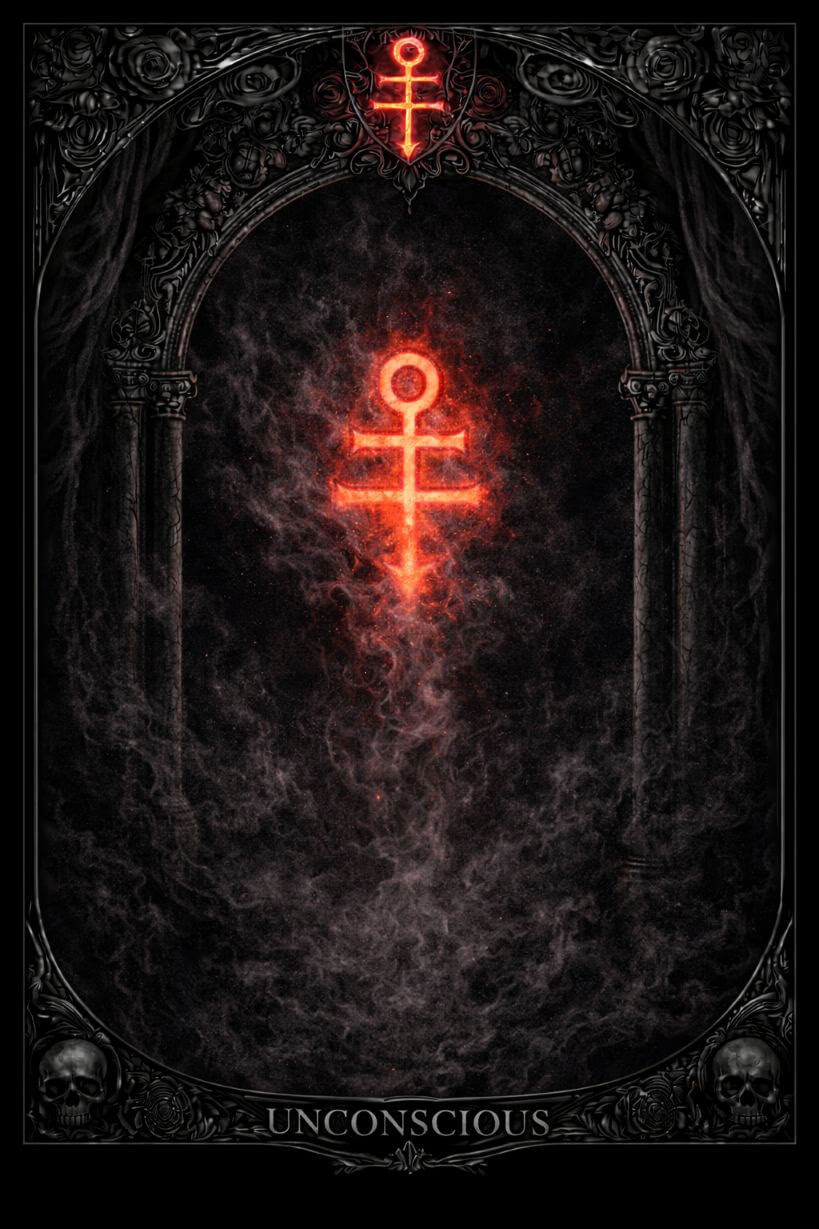
Lilith in the 12th House
Dissolution · Shadow · The Right to Exist Beyond Form
Lilith in the Twelfth House withdraws from visibility altogether. She lives beneath identity, beyond language, in the unconscious, the imaginal, the forgotten, and the forbidden. This is Lilith unbound by form—felt rather than named.
Here, Lilith marks a wound around existence itself. The individual may have absorbed early the sense that simply being was a burden, that their presence caused disturbance, or that safety required disappearance. Boundaries blur. The self retreats inward, carrying instincts that never found a place in the outer world.
This placement often produces profound sensitivity. Dreams, fantasies, intuition, and unarticulated emotions become the primary terrain of experience. The psyche may oscillate between longing for transcendence and fear of annihilation. Escapism, sacrifice, or silent suffering can emerge when instinct has nowhere to land.
Psychologically, Lilith in the Twelfth House asks: Do I have the right to exist even when unseen, unnamed, or unrecognized? The shadow appears through self-undoing, addiction, martyrdom, or identification with victimhood. The self dissolves to avoid conflict with the world.
Integration begins through giving form to the formless. When Lilith is honored here, the unconscious becomes a source of wisdom rather than exile. Compassion extends inward. Solitude becomes nourishment instead of erasure.
This is Lilith at the edge of being—where instinct dissolves into mystery, and the right to exist no longer depends on form, function, or recognition.