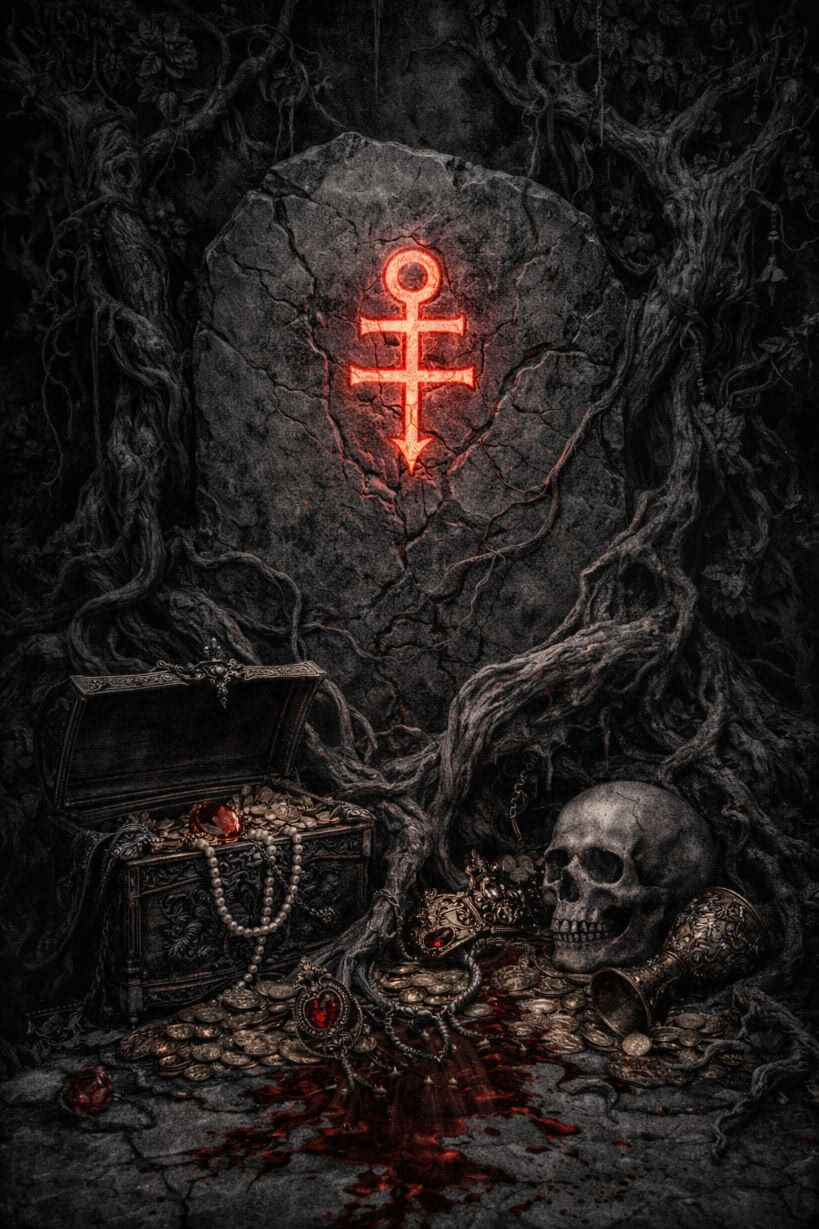
Lilith in the 2nd House
Value · Possession · The Right to Have
Lilith in the Second House moves from appearance into matter. She settles not in the face, but in the hands—in what is held, owned, desired, protected. This is the terrain of value: money, resources, the body’s needs, and the deeper question of worth.
Here, Lilith exposes an early fracture around having. There is often a sense that one’s needs were excessive, inconvenient, or morally suspect. Desire itself may have been shamed—whether for comfort, security, pleasure, or autonomy. As a result, worth becomes unstable, oscillating between deprivation and compulsion.
This placement frequently carries paradox. The person may attract intense material focus—money, power, control—while simultaneously feeling unsafe trusting it. Scarcity consciousness can coexist with defiance: I will take what I need because no one will give it to me. Or the opposite may appear—refusal to want, refusal to attach, as if desire itself were dangerous.
Psychologically, Lilith in the Second House asks: Do I have the right to want, to receive, to keep? The shadow expresses itself through hoarding, self-sabotage, exploitation, or chronic undervaluing of one’s labor and body. The body may be treated as currency rather than as a living boundary.
Integration comes through redefining value from the inside out. Not worth measured by productivity or approval, but by embodied self-recognition. When Lilith is integrated here, desire becomes clean rather than compulsive. Resources are no longer substitutes for self-worth, but extensions of it.
This is Lilith at the root of matter—where instinct meets survival, and the right to have becomes inseparable from the right to be whole.