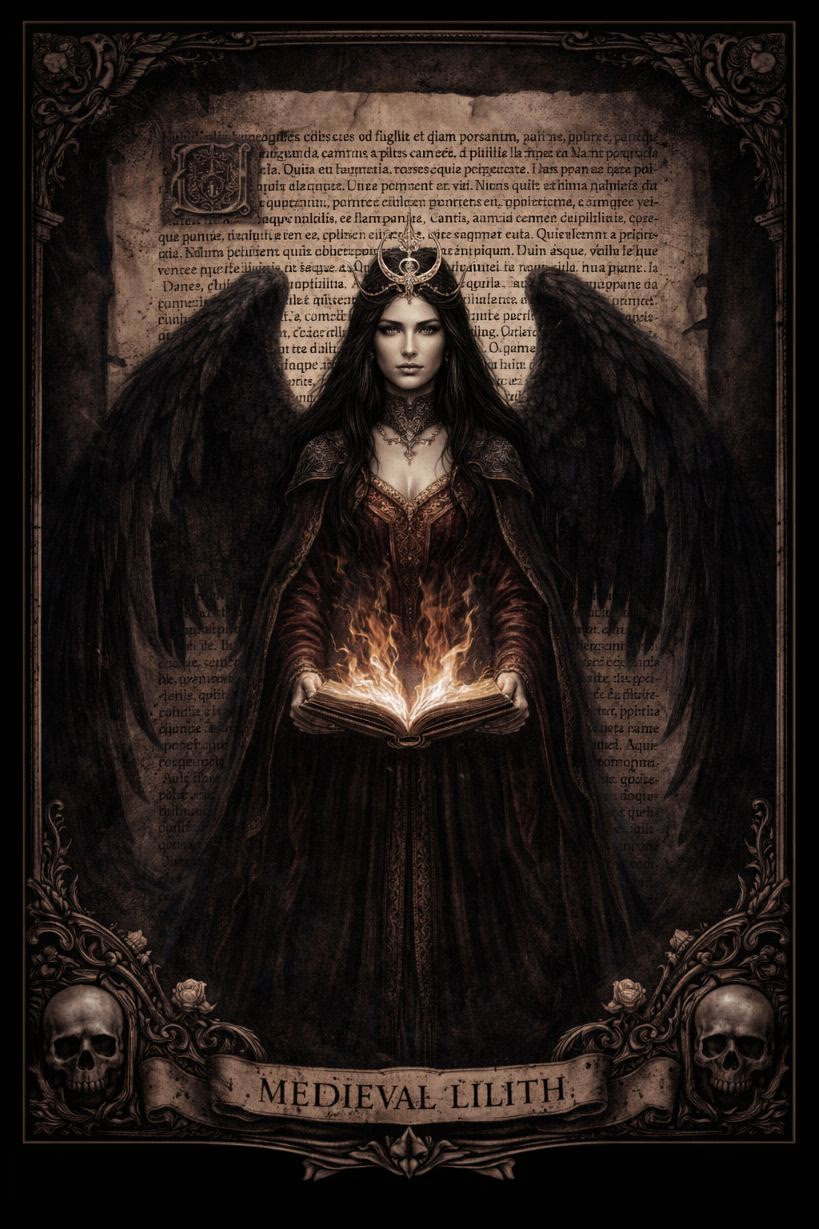
Medieval Lilith: The Demonized Feminine
During the medieval period, Lilith undergoes her most dramatic transformation. What had once been a marginal biblical term and an impersonal class of ancient spirits becomes a fully personified demoness, shaped by religious anxiety, sexual regulation, and moral cosmology.
This Lilith does not arise from scripture itself. She is a product of post-biblical Jewish folklore, rabbinic interpretation, and medieval imagination, emerging gradually rather than through any single authoritative source.
Sources of the Medieval Lilith
Key texts contributing to this development include the Babylonian Talmud, the Alphabet of Ben Sira, and later Kabbalistic and folk traditions.
Across these sources, Lilith acquires a stable narrative identity. She becomes:
Adam’s first wife
A night demon
A dangerous seductress
A threat to mothers and infants
Her defining act is refusal—yet within the medieval moral framework, refusal is recast as transgression, and autonomy becomes a source of disorder.
Lilith as Sexual and Maternal Threat
Medieval Lilith is feared primarily for two forms of power: unregulated sexuality and influence over birth and death.
She is said to seduce men in their sleep, bring illness or erotic disturbance, and steal or kill infants. In response, amulets, incantations, and protective rituals proliferate. These practices are not symbolic gestures but practical defenses against what Lilith is believed to embody.
At this stage, Lilith is fully moralized. She is no longer a liminal or ambivalent force, but an enemy of divine and social order—a figure through whom fear and disorder are named and externalized.
Projection and the Shadow
(Jungian lens, clearly interpretive)
From a Jungian perspective—distinct from medieval self-understanding—Medieval Lilith can be read as a large-scale projection of the feminine shadow.
Qualities rejected by the dominant religious order are displaced onto her figure:
sexual autonomy
bodily knowledge
female agency
nocturnal and instinctual life
What could not be integrated within the moral system was demonized. Lilith becomes not only evil, but functional: a container for fear, guilt, forbidden desire, and anxiety surrounding women’s bodies and power.
Why Medieval Lilith Matters
This period accomplishes several lasting shifts:
Lilith becomes a named, gendered figure with a narrative identity
Sexuality and rebellion become central to her symbolism
The version of Lilith most people inherit today takes shape
Yet this Lilith reveals more about medieval society—its fears, constraints, and projections—than about the ancient wind spirits or biblical term from which her name ultimately derives.
In this sense, Medieval Lilith is less an origin than a crystallization: the moment when centuries of anxiety finally settle into a single, demonized form.
References
Primary / historical sources
- Alphabet of Ben Sira (medieval Jewish text)
- Babylonian Talmud (references to Lilith as night demon)
Scholarly works
- Scholem, Gershom — On the Kabbalah and Its Symbolism
- Patai, Raphael — The Hebrew Goddess
- Encyclopaedia Judaica — “Lilith”