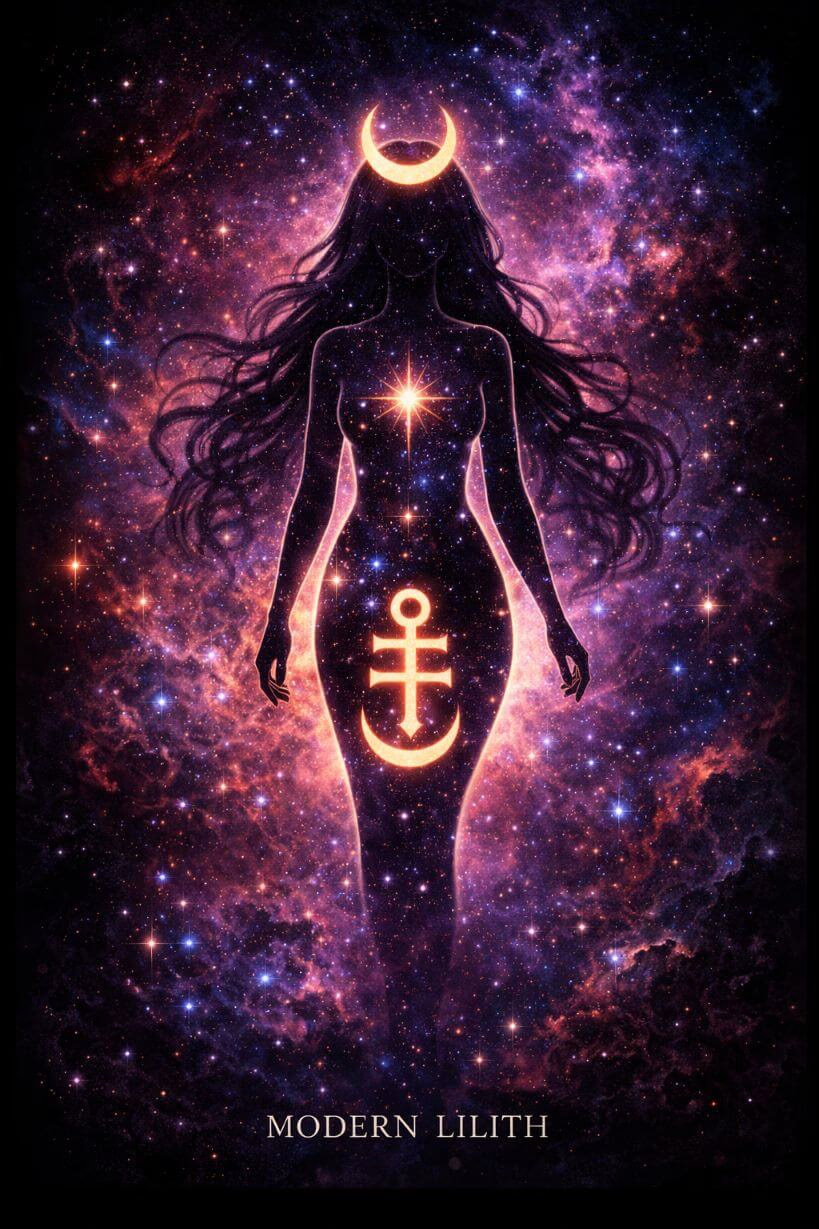
Modern Lilith: From Shadow to Symbol
In the modern era, Lilith is no longer approached as a literal being, demon, or historical figure. She becomes something else entirely: a symbolic figure shaped by psychology, astrology, feminism, and depth-oriented spirituality.
This Lilith does not belong to scripture or folklore.
She belongs to the inner world.
Psychology and the Shadow
With the rise of depth psychology in the twentieth century—particularly in Jungian thought—mythological figures are increasingly understood as expressions of psychic processes rather than external entities.
From this perspective, Lilith represents the repressed or rejected shadow of the feminine: instinct denied by social conditioning, autonomy suppressed in favor of compliance, and aspects of identity exiled to preserve a coherent persona.
She marks what is pushed into darkness not because it is evil, but because it threatens the story the conscious self tells about who it is.
Lilith is no longer feared as an enemy.
She is encountered as a mirror.
This symbolic understanding draws on the work of Carl Jung, who framed mythic images as carriers of unconscious material, and later thinkers such as Erich Neumann, who explored the rejected and transformative dimensions of the feminine psyche.
Astrology and Black Moon Lilith
In modern astrology, Lilith is most commonly associated with Black Moon Lilith—a calculated lunar point related to the Moon’s apogee, not a physical celestial body.
Astrologically, Lilith signifies areas of psychic intensity rather than external fate: raw instinct, boundary violation and reclamation, shame, desire, and the refusal to submit where submission would mean self-erasure.
This is symbolic astrology, not mythic literalism.
Lilith here functions as a psychological marker, not a supernatural force.
She describes where the individual encounters exclusion, defiance, and uncompromising truth within their own experience.
Feminist Reinterpretation
Modern feminist thought further reframes Lilith—not as demon or seductress, but as a symbol of self-sovereignty and embodied autonomy.
This Lilith does not require idealization. She is complex, disruptive, and sometimes uncomfortable by design. Her power lies not in purity or moral elevation, but in truthfulness: the refusal to disappear in order to be acceptable.
Here, Lilith becomes less an icon and more a challenge.
Integration Rather Than Exile
What distinguishes Modern Lilith from all earlier forms is a decisive shift:
She is no longer cast out.
Rather than being expelled in scripture, demonized in the medieval imagination, or aestheticized in Romantic art, Lilith is integrated. She is recognized as a necessary part of psychic wholeness.
Modern Lilith confronts the individual with questions rather than commandments:
Where is instinct silenced for approval?
Where is authenticity traded for belonging?
What part of the self was exiled—and waits to return?
Astropsychological Perspective
Within a Jungian astrological framework, Lilith marks a threshold of individuation: the point where authenticity demands courage rather than conformity.
She is not good or evil, healer or destroyer.
She is uncompromising awareness.
Lilith does not comfort.
She clarifies.
Why Modern Lilith Matters
This phase completes the long historical arc:
Spirit → demon → symbol
Lilith becomes usable without belief, meaningful without literalism. Fear is translated into insight, and myth becomes a tool rather than a threat.
In modern psychology and astrology, Lilith is no longer something to be warded off. She is something to be met—consciously.
References
Psychological & symbolic sources
- Jung, C.G. — The Archetypes and the Collective Unconscious
- Neumann, Erich — The Great Mother
Astrological sources
- Hand, Robert — writings on symbolic astrology
- Demetra George — works on lunar points and feminine archetypes
- Encyclopaedia Britannica — entries on archetypes and modern myth
Cultural analysis
- Patai, Raphael — The Hebrew Goddess
- Contemporary Jungian and astrological scholarship distinguishing symbol from belief