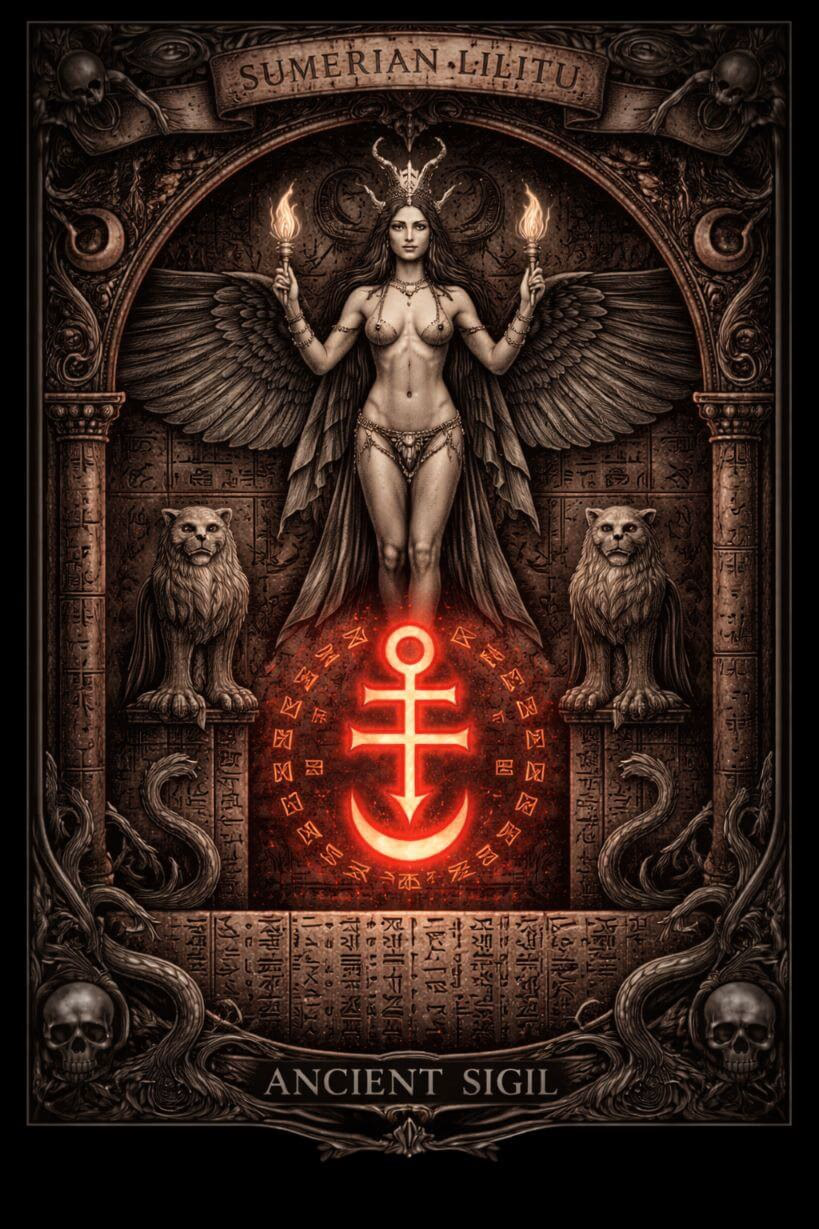
Sumerian Lilitu: The Earliest Wind Spirits
In the earliest Near Eastern texts, the figure later associated with “Lilith” does not appear as a singular mythic woman, goddess, or symbol of rebellion. Instead, the relevant term is lilītu (feminine), part of a broader class of spirit beings in Sumerian and Akkadian religion. Linguistically, the word is connected to air, breath, or wind, situating these beings within the domain of atmospheric and liminal forces rather than personal mythology.
By the third millennium BCE, Mesopotamian sources refer to lilītu as wind or storm spirits, often associated with wilderness, desert regions, and forces beyond human settlement. These entities were commonly understood as ambivalent or harmful, sometimes linked to illness or misfortune, particularly in relation to childbirth and infancy. Later Babylonian imagery depicts them with birdlike features such as wings or talons, emphasizing their non-human and untamed nature.
Crucially, the early record does not support the existence of a unified goddess or individualized figure named Lilith. Lilītu belonged to a broader category that included masculine (lilu) and feminine (lilītu) forms, as well as related figures such as ardat-lilî. These were types, not characters—classifications of spirit activity rather than mythic personalities.
One of the earliest literary passages later connected to Lilith appears in the Epic of Gilgamesh, where a being described as ki-sikil-lil-la-ke occupies the Huluppu Tree before fleeing into the wilderness. While sometimes translated or retroactively identified as Lilith, this association remains debated. The text itself does not present a named or developed mythic woman, and the identification reflects later interpretive layering rather than original intent.
What emerges from the Sumerian and Akkadian material is not a proto-Lilith in the later sense, but a linguistic and conceptual ancestor: a category of wind and night spirits associated with liminality, danger, and the edges of human order. The transformation of these spirits into the named figure “Lilith” occurs much later, through centuries of reinterpretation in Jewish, medieval, and folkloric traditions, rather than as a direct continuation from Sumerian myth.
References
Historical / linguistic sources
- Lilith appears in ancient Mesopotamian context as a class of female wind or storm spirits called lilitu, not as a singular goddess or personified figure. newworldencyclopedia.org
- The Akkadian forms lili and līlītu correspond to these spirits in cuneiform texts and dictionaries. folklore.ee
- The Epic of Gilgamesh contains early references that later translators linked to “Lilith,” but these are debated and do not clearly depict a unified mythic woman. newworldencyclopedia.org
- The direct connection between Sumerian winds/demons and later Jewish and Christian Lilith lore is not straightforward and reflects centuries of reinterpretation rather than direct continuity. Wikiped